Done Through All Available Outlets
On the many faces of American racism, and on pain. He quotes an old friend: the only way a person can know your pain is to feel it themselves.
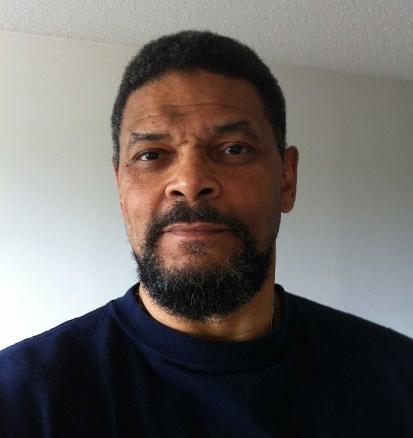
Clyde E. Shy Jr., born Cleveland, 1943. Writing as C. E. Shy.
He published his first poems in a truck plant newspaper, spent the sixties playing bass behind Albert Ayler, converted to Islam in 1969, and put down the pen for thirty years before picking it back up.
My goal is to keep writing until I stop, until I can no longer hear.
Author biography, Arteidolia
He began writing in the seventh grade, encouraged by an English teacher, and kept at it through high school until sports took over. After graduating he went to work at the White Motors Company, a truck assembly plant in Cleveland, and talked the editor of the company paper into running a poetry column. He called it The Poet's Corner. Only one other person ever contributed, a woman who worked in the office.
In 1963 he bought a one-way ticket to Stockholm. He wrote stories to accompany a photographer's pictures, which sold to newspapers and magazines, and he taught himself the bass. Back in Cleveland he joined the Muntu Poets, a workshop run by Russell Atkins and Norman Jordan, and played through the city's short, intense free jazz years.
In April 1969 he took the shahada and became Mutawaf Abdus Shaheed. He stopped playing in 1970, the same year he was elected imam of Masjid al-Mu'min, a position he still holds. He also stopped writing, for close to three decades.
He started again in the late nineties and has not paused since. He now counts more than forty published books across poetry, novellas, short stories and flash fiction, most of them with Inner Child Press. He describes himself as probably one of the last old-school imams from the Dar ul Islam era.
Published by Inner Child Press, Ltd., edited by hülya n. yılmaz.
Where a book carries the author's own preface, it is quoted rather than summarised. Titles without a note are listed by form and year only.
He has appeared in four anthologies and, by his count, eight times in county library poetry collections.

The Cleveland workshop that took him in during 1966, gathered again decades later alongside Norman Jordan, Sababa Akili, Elmer Buford and the rest of the circle.

A biennial anthology for peace, running since 2012. He contributed poems and a foreword.

A monthly anthology series he writes forewords for. Writing on fearlessness in an earlier volume, he put it plainly: speaking the truth in front of a tyrant counts, and knowing when to hold back is not the same as being afraid.
Writing as Proet, his own word for it, he has published a run of collaborations in Arteidolia's swifts & slows. His poems run against photographs and collage. It is work he has been doing since Stockholm, when he wrote stories to fit another man's pictures.

Greiner is a writer and visual artist in New York City. They have also published Drifting Around at 3am together.

David works in photo collage, sculpture and mixed media. Originally from New York, she works from a studio outside San Miguel de Allende, Mexico.

Bussey grew up in Cleveland and trained as a cartographer before turning to photography, working in the tradition of the West African griot.
He writes essays for Arteidolia and for his own site, The Black American Muslim, on faith, race, Cleveland and imprisonment.
On the many faces of American racism, and on pain. He quotes an old friend: the only way a person can know your pain is to feel it themselves.
He calls the idea that any group holds intellectual superiority a myth, or, if you prefer, a lie.
Part of a running series on politics and prisons, drawn from fifty years of work inside them.
An account of the movement he came up in, written by a member who joined at sixteen. He has also written the foreword to Ibrahim's God Bless the Child.
In the early 1970s he built one of the first Islamic prison programs in the United States, inside the Ohio system. He has been writing about incarceration ever since.
The program ran under contract with an African Muslim organisation and served Muslim men across Ohio's prisons. Its aim was practical as much as spiritual: attend to the religious lives of the men inside, and cut the rate at which they came back. Very little like it existed anywhere in the country at the time.
In 1973 an Ohio Senate committee in Columbus opened an inquiry into it, and the proceedings entered the Congressional record. The paperwork survives. Treatment program documents from 1972, and correspondence with officials in Ohio, Pennsylvania and other states, sit in the Masjid al-Mu'min / Islamic Revivalist Movement collection at the Western Reserve Historical Society.
Working as a Muslim minister in the penitentiary, he came to know Fred "Ahmed" Evans, who led the Black Nationalists of New Libya and was sentenced to death after the Glenville shootout of July 1968. Three policemen and three nationalists were killed that night. Evans died in prison.
Those conversations made him one of the few surviving first-hand witnesses to Cleveland's black nationalist movement. James D. Robenalt drew on him heavily for Ballots and Bullets, the 2018 history of that summer, and named him a principal source.
Captivity is a standing subject in the poems. Introducing The Chess Set he wrote that he wanted to touch a nerve, to find out whether anyone was still awake, and to keep reminding readers that they remain still in captivity, mentally physically, and on all the levels of our being.
He has known the inside of a cell himself. In the sixties he spent a stretch in Långholmen prison in Stockholm, waiting on extradition. He returns to it in A Reasonable Facsimile, whose preface also covers the prison program, the Senate inquiry, and the Hajj he made in 1972 as a guest of Prince Muhammad Faisal.
He taught himself the bass in 1964 and spent six years in the middle of Cleveland's free jazz scene. He gave it up in 1970. In 2026 he released a record.
M.A. Shaheed · 2026 · thirteen tracks · 48 minutes
His first album under his own name, and his return to music more than fifty years after he stopped playing. The words come first, as they always have.
Listen on Spotify →The poems were always written for the ear. He spent his twenties playing an instrument that keeps time for everyone else, and the habit stayed in the line breaks. Setting the words to music asked less of him than it might have asked of someone else.
The subjects did not change. Love, memory, what the country does to the people in it, and the same plain moral accounting that runs through the essays and the sermons.
He bought a Kay display bass from Higbee's department store in Cleveland and taught himself to play it in 1964, when his friend Don Ayler picked up the trumpet to join his older brother's band. Within two years he was working with Albert Ayler, Charles Tyler, Norman Howard, and the players who would become the Black Unity Trio.
He can be heard on Holy Ghost, the Revenant box set of rare and unissued Ayler recordings released in 2004. His playing appears on the third and fourth discs, taken from two April 1966 nights at La Cave with Don Ayler on trumpet, Michel Samson on violin and Ronald Shannon Jackson on drums.
Asked years later what Ayler's music meant, he said: Albert is his music. His music is everywhere, touches everything.
He stopped in 1970. He had a child, he was getting older, and the scene was changing in ways he did not care for; players were getting desperate enough to take any work going. He decided he could earn a living some other way and keep writing. He later advised Kasper Collin on the 2005 documentary My Name Is Albert Ayler.